
The Menstruation Crisis in Rural Ethiopia—and How It Is Undermining a Nation’s Future
Menstruation is a natural biological process, yet in rural Ethiopia, it has become a powerful symbol of inequality, silence, and systemic neglect. Every month, millions of girls and women manage their periods without privacy, protection, or basic information, not because solutions do not exist, but because menstruation has been pushed to the margins of public policy, health systems, and cultural discourse. What should be a routine part of life has instead become a barrier to education, health, dignity, and national development.
Globally, international health and development agencies estimate that more than 500 million women and girls lack access to adequate menstrual hygiene management. Sub-Saharan Africa bears a disproportionate share of this burden, where poverty, weak infrastructure, and gender inequality intersect. Ethiopia, with more than 80 percent of its population living in rural areas, reflects this crisis sharply. While urban centers have seen gradual improvements in menstrual education and access to sanitary products, rural communities remain largely excluded from these gains, leaving girls and women trapped in a cycle of monthly vulnerability.
National education data and local assessments consistently reveal that menstruation is a hidden but significant contributor to school absenteeism and dropout among rural girls. Many miss three to five days of school every month due to fear of leakage, teasing, or humiliation. Over time, these repeated absences lead to poor academic performance and eventual withdrawal from school. Rural schools often lack functional toilets, water, doors, disposal systems, or trained teachers who can address menstrual health openly. For many girls, the onset of menstruation quietly marks the beginning of the end of their education.
Testimonies from rural communities illustrate the human cost behind these statistics. A 14-year-old girl from a remote kebele in the Amhara region recounts staying home during her period because she feared staining her clothes and being mocked by classmates. She describes teachers who avoided the subject entirely and peers who laughed without understanding. Eventually, the repeated absence became permanent, not because she lacked ability or interest, but because the system failed to protect her dignity.
The shortage of menstrual hygiene materials in rural Ethiopia is severe and persistent. Commercial sanitary pads are often unavailable in local markets, unaffordable for low-income households, or considered non-essential in families struggling with food insecurity. As a result, girls and women rely on old cloth, mattress foam, leaves, or nothing at all. These unsafe alternatives increase the risk of reproductive tract infections, urinary infections, and chronic health complications. Health workers in rural clinics report treating preventable infections linked directly to poor menstrual hygiene, yet sanitary products are rarely included in essential health supply lists.
Water scarcity compounds the crisis. In many rural areas, women and girls walk hours to fetch water, making basic hygiene during menstruation extremely difficult. Washing reusable materials is often done secretly, using contaminated water, and drying them in hidden, damp places to avoid shame. Hygiene becomes a risk rather than a safeguard. Without adequate water and sanitation infrastructure, menstrual dignity becomes impossible to achieve.
From a medical perspective, menstruation-related pain, excessive bleeding, infections, and irregular cycles are widely normalized. Girls grow up believing that severe discomfort is inevitable and that seeking medical care is unnecessary or shameful. Rural health posts, already overstretched and understaffed, focus primarily on maternal and child survival, leaving menstrual health largely unaddressed. Professor Abebe Zegey emphasizes that when menstruation is excluded from health systems, the consequences extend beyond individual suffering to long-term impacts on fertility, productivity, and mental health.
Cultural beliefs continue to reinforce silence around menstruation. In many rural communities, menstruation is associated with impurity, weakness, or danger. Menstruating women may be restricted from cooking, attending religious services, or participating in social activities. Girls are discouraged from speaking openly, even within their families. Fathers and brothers are excluded entirely from the conversation, reinforcing stigma and misinformation across generations. This silence protects tradition but sacrifices health, education, and human rights.
Local testimonies reveal how deeply ingrained this silence is. A mother from Oromia region explains that she never discussed menstruation with her daughter because her own mother never spoke about it. When her daughter experienced her first period, she believed she was seriously ill and cried through the night in fear. In conflict-affected and displaced communities, particularly in parts of Tigray and neighboring regions, the crisis intensifies. Humanitarian assistance often prioritizes food and shelter, while menstrual supplies are inconsistent or absent, rendering women invisible in emergency responses.
Girls and women with disabilities face even greater challenges. Without caregivers trained in menstrual support or accessible sanitation facilities, they experience humiliation, neglect, and increased risk of abuse. Their experiences are rarely documented, discussed, or addressed, leaving them doubly marginalized within already vulnerable communities.
The menstruation crisis in rural Ethiopia has far-reaching implications for national development. It undermines educational attainment, limits women’s participation in the workforce, strains public health systems, and perpetuates gender inequality. A society cannot achieve sustainable growth when half its population loses productive days every month due to preventable conditions. Development strategies that fail to address menstrual health remain fundamentally incomplete.
The root causes of the crisis are interconnected and systemic. Lack of menstrual education, shortage of affordable hygiene materials, weak water and sanitation infrastructure, entrenched cultural stigma, and limited policy prioritization reinforce one another. These challenges are not isolated accidents; they are the result of long-standing neglect. Yet they are also solvable through coordinated action, political commitment, and community engagement.
Ending the menstruation crisis in rural Ethiopia requires integrating menstrual health into national health and education policies, investing in local production and distribution of affordable sanitary products, improving water and sanitation infrastructure, training teachers and health workers, and engaging men, boys, and religious leaders in open dialogue. Menstruation must be recognized as a public health, education, and development issue, not a private inconvenience.
Rural Ethiopian girls are not asking for sympathy. They are demanding dignity, knowledge, and systems that work. Menstruation is not the problem. Silence and neglect are. Until rural girls can manage their periods without fear, shame, or illness, Ethiopia’s development narrative will remain incomplete—written in endurance, inequality, and quiet suffering.
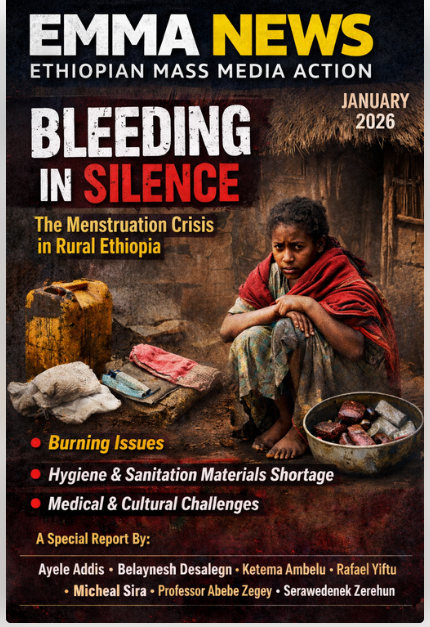
Menstruation is a biological fact. In rural Ethiopia, it has become a social reminder of inequality, poverty, silence, and systemic neglect. Every month, millions of girls and women bleed without privacy, protection, or dignity—hidden behind cultural taboos, economic hardship, and policy blind spots.
This is not merely a women’s issue.
It is a public health emergency, an education crisis, and a development failure.
A Global Problem With a Rural Ethiopian Face
Globally, international agencies estimate that over 500 million women and girls lack access to adequate menstrual hygiene management. In Sub-Saharan Africa, menstruation intersects sharply with poverty, water scarcity, and gender inequality. Ethiopia—where over 80 percent of the population lives in rural areas—sits at the center of this crisis.
While urban girls increasingly access sanitary products and menstrual education, rural girls are left behind. International frameworks recognize menstrual health as a human rights issue, yet on the ground in Ethiopia’s villages, menstruation remains unspoken, unsupported, and untreated.
When a Girl’s Education Ends With Her First Period
National education data and NGO assessments consistently show that menstruation is a major contributor to girls’ absenteeism and dropout rates in rural Ethiopia. Many girls miss three to five days of school every month. Over a year, this translates into weeks of lost learning—and eventually, permanent withdrawal.
In rural schools:
- Toilets are often nonexistent or shared with boys
- There is no water, no doors, nand o disposal system
- Teachers are rarely trained to address menstrual health
A 14-year-old girl from a rural kebele in the Amhara region explains:
“When my period comes, I stay home. I fear staining my clothes. Boys laugh. Teachers say nothing. After some time, I stopped going to school completely.”
Menstruation quietly removes girls from classrooms—not by law, but by neglect.
Hygiene and Sanitation: A Monthly Survival Struggle
The shortage of menstrual hygiene materials in rural Ethiopia is severe. Commercial sanitary pads are:
- Too expensive
- Unavailable in local markets
- Considered “luxury items” by households struggling to buy food
As a result, girls and women use:
- Old cloth
- Mattress foam
- Leaves or grass
- No protection at all
These unsafe practices expose women to urinary tract infections, reproductive tract infections, and long-term gynecological complications. Health professionals in rural clinics report treating infections that could be prevented with basic menstrual supplies—yet such supplies are rarely included in essential health packages.
Water scarcity worsens the crisis. In communities where women walk hours to fetch water, washing reusable materials becomes nearly impossible. Hygiene turns into risk.
Medical Silence and Normalized Pain
From a medical perspective, menstruation-related pain, heavy bleeding, and infections are dangerously normalized in rural Ethiopia. Girls grow up believing that suffering is natural and seeking care is unnecessary—or shameful.
Health posts are:
- Understaffed
- Under-resourced
- Focused primarily on maternal and child mortality
Menstrual health is rarely discussed during health extension programs. As Professor Abebe Zegey notes:
“When a health system ignores menstruation, it ignores half of human biology. The long-term consequences affect fertility, productivity, and mental health.”
Culture, Taboo, and the Politics of Silence
Cultural beliefs continue to frame menstruation as:
- Dirty
- Shameful
- Dangerous
- Unholy
In some communities, menstruating women are restricted from:
- Cooking food
- Attending religious services
- Participating in community meetings
Girls are told not to talk about menstruation—even with their mothers. Fathers and brothers remain completely excluded from the conversation, reinforcing stigma and misinformation.
This silence protects tradition at the expense of health and dignity.
Local Testimonies: Lives Shaped by Monthly Fear
In Oromia region, a mother of five explains:
“I never taught my daughter about menstruation. My mother never taught me. When my daughter started bleeding, she cried all night, thinking she was sick.”
In Tigray and conflict-affected areas, displacement has worsened period poverty. Humanitarian aid often prioritizes food and shelter, while menstrual supplies are inconsistent or absent.
For girls with disabilities, the crisis is deeper. Without trained caregivers or appropriate facilities, they experience humiliation, neglect, and abuse—often hidden within families.
Menstruation, Development, and the Cost to Society
The menstruation crisis directly undermines:
- Education outcomes
- Women’s workforce participation
- Public health
- Gender equality
- Economic productivity
A society cannot grow when half its population loses days of productivity every month. Development plans that ignore menstrual health are structurally incomplete.
As Ketema Ambelu argues:
“You cannot talk about national development while rural girls bleed in silence. Menstruation is not marginal—it is central to growth.”
Burning Issues That Demand Urgent Action
The crisis is driven by interconnected failures:
- Lack of menstrual health education
- Shortage of affordable hygiene materials
- Poor water and sanitation infrastructure
- Cultural stigma and gender inequality
- Weak policy prioritization
These are not isolated problems. They are systemic—and solvable.
Breaking the Silence: What Must Change
Ending the menstruation crisis in rural Ethiopia requires:
- Integrating menstrual health into national health and education policy
- Producing and distributing low-cost sanitary products locally
- Investing in water, sanitation, and school infrastructure
- Training teachers and health workers
- Engaging men, boys, and religious leaders in dialogue
Menstruation must move from the shadows into policy rooms.
Conclusion: Menstruation Is Not the Problem—Neglect Is
Rural Ethiopian girls are not asking for sympathy.
They are demanding dignity, knowledge, and support.
A nation that silences menstruation silences its future.
Until rural girls can manage their periods without fear, shame, or illness, Ethiopia’s development story will remain incomplete—written in blood, endurance, and silence.

Data Privacy, Artificial Intelligence, and the Fight for Digital Trust in Ethiopia
By Meseret Abebe Abay Building on “The Hidden Cost of False Information,” EMMA NEWS, Volume 101, 2025, by Meseret Abebe Abay. Fighting lies through fact-checking, personal-data protection, and accountable digital governance Introduction: When false information becomes a digital governance problem In today’s digital age, information travels faster than ever before. Social media platforms, messaging applications, […]