
How Climate Change Turned Pastoral Survival into a Cross-Border Conflict in East Africa
By Ayele Addis Ambelu
Before the raid, there had been an unnatural silence earlier than evening.
There was no wind in and about Dukana, the dust-blown town that is built on the Ethiopia-Kenya border. The cows were impatiently fussing in small circles, and their ribs were pricking on sunken bodies. The elderly imply that animals are the ones who are ahead of the disaster that human beings are about to experience. This was the first shot of the sunrise in the plain, and the birds were flying away to the white sky, and the ladies were protecting the children.
By noon, three men were dead, dozens of cows were stolen, and an old agreement, according to which the communities could share the water since time immemorial, was broken as the loosened soil they stood on.
There was not even a single conflict in this. It proved to be the last contribution to an old-standing war that had a fire that could not be seen but was endless.
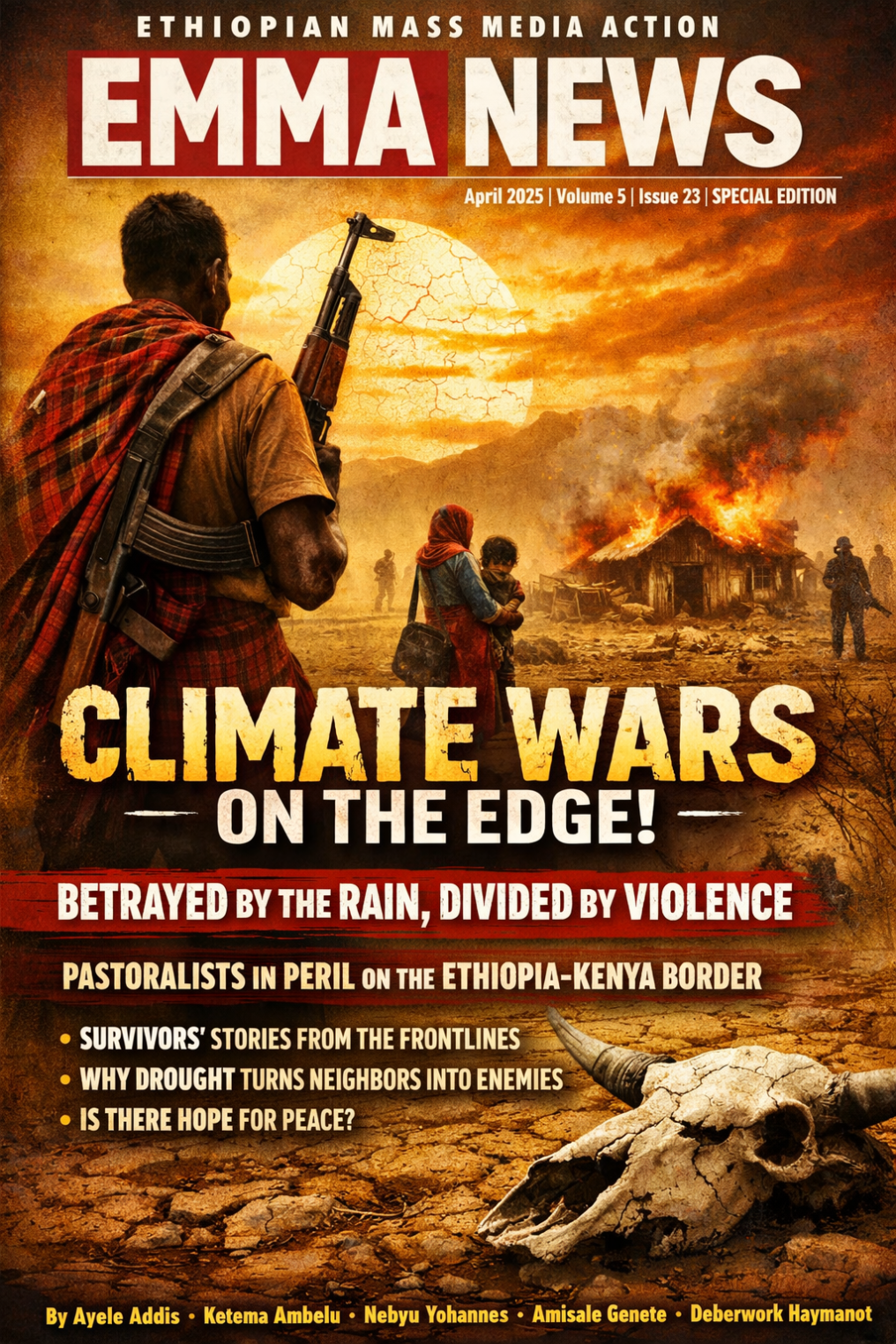
Along the Ethiopia–Kenya border, climate-induced droughts are transforming fragile pastoral livelihoods into a tinderbox of conflict. Local communities, largely dependent on livestock, are experiencing the harshest effects of erratic rainfall, prolonged droughts, and shrinking grazing lands. These environmental shocks are now intersecting with weak governance, porous borders, and the easy availability of small arms, creating a volatile mix that has pushed local tensions into national and regional security concerns.
A Border Drawn on a Dying Land
The Kenya- Ethiopian boundary falls through one of the most climatically sensitive areas in East Africa. It hosts pastoralist communities, Borana, Gabra, Rendille, Turkana, who live on rain-fed sheep and goats grazing and water holes which supply water intermittently. Their power for centuries was mobility. The scarcity was addressed through migration and bargaining to reach accessibility, and customary institutions to deal with the drought.
“For generations, we shared these lands peacefully,” recalls Hassan Boru, a 63-year-old Borana elder from southern Ethiopia, sitting under an acacia tree whose leaves have turned brittle and sparse. “When the rains failed before, we moved together. Now there is nowhere left to move.”
According to elders on both sides of the border, rainfall patterns have changed dramatically over the past decade. Seasonal rains now arrive late—or not at all—forcing pastoralists to migrate farther and more frequently in search of water. These movements increasingly bring rival communities into confrontation.
A Kenyan Turkana herder, Lokiru Ekal, described the desperation:
“When your animals are dying and your children are hungry, you don’t think about borders or agreements. You think about survival.”
Climate change, however, has completely altered this system.
Based on data provided by the Ethiopian Meteorological Institute and the Kenya National Drought Management Authority (NDMA), the average temperature in the border area has increased by 1.5 °C since the 1980s, and some rainfall patterns have also become unpredictable. A major drought occurred in the Horn of Africa in 2020-23, and five successive failed rainy seasons were experienced, the worst in at least 4 decades.
The former agony cycle has turned into a crisis that cannot be reversed.
They will not be able to recover the land, as an elderly Borana of southern Ethiopia, Hassan Boru, says. “There had been grass before a drought. Now the soil is dead.”
Climate Shock Trigger to Conflict.
The trigger does not appeal to climate change. But it loads the gun.
With the fading away of the pasture, the pastoralists will be left with no choice but to travel longer distances and cross national and social borders more often. These movements break the old forms of conflict-resolution, which are to act upon calculable scarcity, but not upon the new deal of unremitting loss.
“They are all desperate simultaneously, and there is no use in negotiation,” and this is what Abdi Wako, who is also a community peace mediator in Moyale, says.
National security officials in both Ethiopia and Kenya confirm that climate stress is now a major driver of cross-border violence. A senior Kenyan security officer, speaking on condition of anonymity, told this reporter:
“Most of the clashes we respond to today are linked to drought-related migration. Climate change has turned traditional coping mechanisms into security threats.”
International reports echo this concern. The United Nations Environment Programme (UNEP) has repeatedly warned that climate change acts as a “threat multiplier” in the Horn of Africa, intensifying existing vulnerabilities such as poverty, weak institutions, and inter-communal mistrust. Meanwhile, the Intergovernmental Authority on Development (IGAD) has identified borderlands as climate-conflict hotspots, where local disputes can easily escalate into international tensions.
Whatever thou can tell is not there.
The reports of the Armed Conflict Location and Event Data Project (ACLED) show that the intensity of resource conflicts between the countries in the north of Kenya and southern Ethiopia due to the climate has grown over the last 10 years by more than 60 percent, and the violence was at its climax during the drought years.
The small arms have made it easy since the decades of instability in the region, and it has changed water conflict into a fatal conflict.
The Anthropic Face of Climatic Violence.
Fatuma Abdi, 38, sits on a damaged plastic chair on her lap at a temporary shelter outside Moyale town and has a sleeping child on her lap. It was also during a rivalry competition that her husband was killed in a raid over a dried riverbed.
She rationalized with herself that he had gone to rescue the animals. “He did not come back.”
Fatuma does not address the topic of climate policy and adaptation frameworks. She mentions famine, panic, and defeat.
My children tell me why the rain does not favor us.
The fact that the cases of acute malnutrition and illnesses of trauma are increased is referred to by the local health authorities, and school dropout is particularly high in the cases of displaced children. Girls are also being dumped out of school to assist in the collection of water during times of 15-20 kilometers per day walking.
That is the way climate change is robbing individuals of their future,e taking the opinion of one nurse at Moyale Health Center who refused to provide his name, citing the security issue.
In Dukana and Moyale, the human cost is visible in overcrowded schools turned into temporary shelters. Fatuma Abdi, a mother of five who fled violence near the border, described her loss through tears:
“I lost my husband in a clash over a water point. Now I am both mother and father. Climate change took our rain, but the gun took my family.”
Local health workers report rising cases of malnutrition, trauma, and school dropouts, especially among girls. These social impacts rarely make national headlines, yet they represent the long-term consequences of climate-driven conflict.
Where Local Coping Systems Fail.
Earlier on, disputes and graver trials were settled by councils of the elders by paying instead of force. However, their strength has deteriorated with the long-term climate stress.
“You cannot find a man who is all dead: his animals,” said older Guyo Dida.
The ancient regulations were founded on the fertile harvest. Now nothing returns.
The young men are more likely to resort to violence since they are more armed and not tied to the traditional leadership. The elders clarified that climate change not only made the land dry, but also disintegrated the society.
Local Reality and National Security.
The borderlands have become the security hot spots to the governments.
This has been evidenced by the testimony of one of the high security officials in Kenya, who attested that the cross-border conflicts that have been experienced in the recent past have mostly been linked to migration due to drought. Ethiopian local authorities replicate the issue and confess that the capacity gaps are currently present.
According to an Ethiopian district official, violence is a reaction to the security situation. It is a forerunner of climate change.
The local populations are of the perception that the intervention processes are not well coordinated across borders, as they are slow and under-funded, irrespective of the plans of the nations on climate adaptation.
One of the hotels that has expelled herders said, Peace meetings are held. Drought never goes to meetings.
Women: The Negotiators Who Went Unheard.
Men are usually found in the conflict statistics, but women are the unknown victims of climate violence. Women in displacement camps share water, tend to the injured, and secretly reconcile families.
Amina Roba, the leader of a women’s group, said, “We are fed up with burying sons.”
“We want water, not weapons.”
Informal peace negotiations have also been initiated by local women’s associations, where access to water points can be matched to ceasefire agreements- a development hardly recognized by national policy-making.
As the Sky Waits
And when another rainy season is at hand, elders meet again under the same acacia trees. They bargain grazing pathways, rumors of rainfall,s and pray.
Hassan Boru said, “We are not violent people.”
We are people who wait to get rained.
However, in case the sky fails once again, the border will burn once again, not because people prefer fighting, but because climate change has provided them with no other safe options.
And it is the climate crisis of the world that is made excruciatingly, unmistakably local in that quietness just before daybreak when the creatures get antsy, and the earth is holding its breath.
Both governments have launched climate adaptation and peacebuilding initiatives, including cross-border dialogue forums and water infrastructure projects. However, community leaders argue that implementation remains slow and disconnected from local realities.
“Meetings happen in capitals,” said Abdi Wako, a community peace mediator in Moyale. “But the bullets are here.”
ጋዜጠኞችን የመመዝገብ እና እውቅና የመሰጠት ሕጋዊ ኃላፊነት እንደተሰጠው ገልጿል፡፡
ምክር ቤቱ ጋዜጠኞች ሚመዘግባቸዉ እውቅና ያላቸው እንዲሆኑ ለማድረግ፣ ፍረጃዎችን ለማስቀረት፣ ከጥቃት ለመከላከል እና ጥቃት ሲደርስባቸው ለመከላከል እና ጥብቅና ለመቆም የሚያስችል መሆኑ ጠቁሟል። ባለሥልጣኑ ያወጣው መግለጫ ገፅታዬን የሚያበላሽ ነው ሲል የኢትዮጵያ መገናኛ ብዙኃን ምክር ቤት ገለጸ የኢትዮጵያ መገናኛ ብዙኃን ባለሥልጣን ‘ምክር ቤቱ ለሚመዘግባቸዉ ጋዜጠኞች እዉቅና አልሰጥም፤ ኃላፊነቱም አደለም’ ሲል በትናንትናው ዕለት ያወጣው መግለጫ ገፅታዬን የሚያበላሽ ነው […]