
A Press for the Planet: Journalism in the face of the Environmental Crisis
Between May 2-4, 2024, Chile and UNESCO will host World Press Freedom Day. Thirty years have passed since the first World Press Freedom Day celebration in 1994 and of the historic Santiago Declaration adopted during the “Seminar on the Development of Media and De- mocracy in Latin America and the Caribbean” (May 6, 1994), which marked a new phase in promoting the right to freedom of expression and of the press, as well as the development and recognition of community media, independence, and pluralism of the media in Latin America and the Caribbean. Therefore, the WPFD event is a good opportunity to return to the city of Santiago and reaffirm everyone’s commitment to promote and guarantee freedom of expression worldwide.
FREEDOM OF EXPRESSION, SUSTAINABLE DEVELOPMENT, AND ENVIRONMENTAL CRISES
Sustainable development is in jeopardy. The triple planetary crisis—climate change, biodi- versity loss, and air pollution—along with their connections to public health issues, the need to strengthen democracy, to tackle dis-/misinformation on digital platforms, among other issues have become major challenges for humanity.
The information ecosystem has a key role to play in responding to this existential crisis. The access to reliable information and the importance of strengthening independent environ- mental and scientific journalism is more critical than ever. It is important to be very clear: independent journalists as well as scientists are crucial actors in helping our societies to sep- arate facts from lies and manipulation in order to take informed decisions, including about environmental policies. Investigative journalists are also shedding light on environmental crimes, exposing corruption and powerful interests, and sometimes paying the ultimate price for doing their job.
That is why, in 2024, World Press Freedom Day will be dedicated to the importance of jour- nalism and freedom of expression in the context of the current global environmental crisis. We aim to highlight the significant role that the press, journalism, access and dissemination of information play to ensure and secure a sustainable future that respects the rights of indi- viduals and their diversity of voices, as well as gender equality.
CURRENT CHALLENGES
Awareness of all aspects of the global environmental crisis and its consequences is essential to build democratic societies. Journalistic work is indispensable for this purpose, along with the recognition of various primary sources of information required for comprehensive, ac- curate, and historically grounded reporting. Journalists encounter significant challenges in seeking and disseminating information on contemporary issues, such as supply-chains prob- lems, climate migration, extractive industries, illegal mining, pollution, poaching, animal traf- ficking, deforestation, or climate change. Ensuring the visibility of these issues is crucial for promoting peace and democratic values worldwide. The various threats (physical, economic, political, psychological, digital, and legal) to which journalists are subject reflect a complex context in which there is a constant struggle for information control.
1. Dis-/misinformation on the Climate Crisis
At the 2021 celebration of World Press Freedom Day, UNESCO highlighted the impact of disinformation and misinformation on societies while promoting the idea of information as a “public good.” In the context of the world’s triple planetary crisis, dis-/misinformation campaigns challenge knowledge and scientific research methods. Attacks on the validity of science pose a serious threat to pluralistic and informed public debate. Indeed, misleading and false information about climate change can, in some cases, foster doubt and incredulity about environmental issues, their impact and urgency, and undermine international efforts to address them.
Dis-/misinformation about environmental issues can lead to a lack of public and political support for climate action, effective policies, and the protection of vulnerable communities affected by climate change, as well as of women and girls, as climate change tends to exacer- bate existing inequalities.
In this context, to achieve sustainable development, it is necessary for journalists and sci- entists to report accurately, timely, and comprehensively on environmental issues and their consequences, as well as on possible solutions.
This requires a comprehensive strategy that includes:
- Preventing and protecting against crimes committed against journalists.
- Ensuring the rights to freedom of expression, freedom of scientific research, and access to key sources of information, in addition to combating dis-/misinformation through journalism.
- Promoting the plurality, diversity, and viability of media, especially regional, local, indigenous, and/or community-based media.
- Ensuring that the governance of digital platforms foster the transparency of tech- nology companies, their accountability, due diligence, user empowerment, and content mod- eration and curation based on international human rights’ standards, as indicated in UNES- CO’s Guidelines for the Governance of Digital Platforms.
- Promoting Media and Information Literacy programs to empower users with skills to engage and think critically in the digital environment.
The International Decade of Sciences for Sustainable Development (2024-2033), proclaimed by the United Nations General Assembly, provides an ideal framework to highlight freedom of expression, particularly of environmental and scientific journalists, as well as of scientists who are key actors in knowledge production. These actors are all indispensable in the fight against dis-/misinformation and the promotion of a sustainable future.
2. Environmental journalism: fighting threats of violence and promoting diversity
Journalists and communicators covering environmental issues face many threats and forms of violence due to the sensitive nature of their reporting. These range from physical violence, surveillance, pressure, or intimidation by national and transnational companies that could be affected by their activities, to the imposition of official controls and the pernicious use of the State apparatus (administrative and judicial), as well as filters and content moderation to restrict access to information. All share the same objective: to prevent the public’s access to critical information and limit people’s ability to make informed decisions for their communi- ties and well-being.
The latest UNESCO Director-General’s Report on the Safety of Journalists and the Danger of Impunity, (2022), highlighted a steady increase in the percentage of journalists killed outside of armed conflict zones in recent years, with many of them working on environmental issues. Indigenous, local, and independent journalists and communicators are particularly affected by this type of violence as they operate on the front lines to gather information and often lack adequate protection to carry out their work safely.
In addition to these challenges are a lack of pluralism and diversity, conflicts of interest, eco- nomic capture, and challenges to the viability of the media. The various threats faced by journalists and communicators are often intimidating and can lead to self-censorship, as jour- nalists may prefer to remain silent rather than risk their jobs, or their own and their families’ safety.
Moreover, the risk posed by these various threats to press freedom is twofold. On the one hand, they weaken the role of journalists as watchdogs of democracy and reduce their ability to hold the powerful to account – both public and private actors. On the other hand, cen- sorship can erode people’s trust in journalism and affect their right to access information, creating a vacuum conducive to the proliferation of dis-/misinformation.
3. Journalism, Gender Equality and the Environment
Women and men journalists and communicators alike play a key role in covering environmen- tal issues, but women journalists often face particular challenges and risks in carrying out their tasks. In addition to cases of sexual harassment, gender-based discrimination, online harassment, and threats with sexist and misogynistic connotations, they may also be subject to various forms of gender-based discrimination in association with their journalistic investi- gations.
On the other hand, in the digital environment, women are constant targets of gender-based violence, being attacked for the simple fact of being online and being women. UNESCO’s re- search “The Chilling” found that women in prominent and visible positions, such as journal- ists, tend to attract more virulent abuse. In a survey of 901 journalists, nearly three-quarters (73%) said they had experienced online violence.
In addition to the risk related to their work, all women often face greater risks and dispro- portionate burdens due to the impacts of climate change, notably women in situations of poverty and due to existing roles, responsibilities, and cultural norms. Undoubtedly, the bat- tle to install a gender perspective capable of confronting violence is urgent, advancing in the existence of media which promote professional journalism that discusses the eradication of all types of discrimination and biases. Beyond protection, it is essential to also involve and empower women as change leaders, in particular indigenous women, in building climate re- silience.
THE OPPORTUNITIES: SAFEGUARDING JOURNALISM IS PROTECTING THE PLANET
The United Nations Framework Convention on Climate Change (1992) and the Paris Agree- ment (2015) are important instruments to call for a recognition of the importance of public access to information as a key element to empower citizens to engage in climate action and to highlight the fundamental role of journalists in presenting scientific findings, data, and expert opinions in an accessible way. In the same vein, the Aarhus Convention (1998) and the Escazú Agreement (2018) further strengthen the importance of access to information and public participation in environmental decision-making and access to justice.
The international community should make it a priority to protect journalists and communica- tors in general and environmental journalists in particular. As part of that task, it is important to train the media to report more effectively on climate and environmental issues to protect the planet and inform the public so that they have a better understanding of these issues. Various international organizations, governments, NGOs, and advocacy groups are using pub- lic interest information to redouble their efforts for a more sustainable future in line with the Sustainable Development Goals of the 2030 Agenda for Sustainable Development.
The unprecedented level of awareness of environmental issues among younger generations, including journalists, is a very positive indicator for the search for solutions to today’s envi- ronmental challenges. Youth are paving the way for sustainable development and are de- manding concrete and effective action on climate and biodiversity emergencies, the impacts of climate change and its effect on people’s lives . As highlighted in the 13th edition of the UNESCO Youth Forum that focused on the social impacts of climate change and the need to achieve an equitable climate transition, the lives of future generations hang in the balance as those most affected by climate change will be the young people of today. In this context, media and information literacy programs are an opportunity to strengthen critical thinking around these issues, in particular among the youth.
It is clear that continued inaction will lead to the aggravation of existing problematic phe- nomena such as climate-forced migration, displacement, democratic breakdowns, and water scarcity, which risks inducing and further exacerbating social tensions and conflict.
OBJECTIVES OF THE NEXT EDITION OF WORLD PRESS FREEDOM DAY
World Press Freedom Day 2024 is an important opportunity for the international community to collectively reflect on these multidimensional challenges, the fundamental role of jour- nalism, and the transformative power that reliable information has to protect our planet, achieve sustainable development, and consolidate democracies.
World Press Freedom Day 2024 will serve as a platform to:
- Assess and discuss the situation of the right to press freedom globally, identifying areas where journalists face repression, violence, or censorship.
- Establish and strengthen ties between different actors, such as media organizations, NGOs, governments, and international bodies, to work together to promote and protect the right to press freedom.
- Reaffirm our commitments to freedom of expression and press freedom as human rights enshrined in various international instruments, recognizing their importance for the strengthening of democratic societies.
- Call for the importance of reliable and accurate information, especially that which denounces and investigates the environmental crisis and its effects.
- Raise awareness on the urgency to defend the media from attacks on their indepen- dence, freedom, and pluralism and recall the Windhoek+30 Declaration on information as a common good.
- Recall the Santiago Declaration, which stresses the importance of respecting media pluralism and cultural, linguistic, and gender diversity as a fundamental factor of democratic societies and which should be reflected in all media.
- Pay tribute to journalists who have lost their lives and those who fight for their free- dom in the line of duty.
- Raise awareness about the violence faced by journalists and communication work- ers when promoting sustainable development and environmental protection, encouraging a gender-responsive perspective that promotes non-sexist journalistic discourse.
- Promote professional journalism that discusses the eradication of all types of dis- crimination and biases against women.
- Call for greater support for the media to strengthen their institutional capacities to report on climate change and environmental crises, paying special attention to the viability of the media.
- Accelerate people’s media and information literacy to foster critical and informed thinking skills as the main tool to combat the problem of dis-/misinformation and its effects on our democracies.
- Take advantage of the International Decade of Sciences for Sustainable Develop- ment to highlight the fundamental role of freedom of expression for science journalists, em-
phasizing the need to protect this freedom while actively combating disinformation in sci- ence.
- Promote stronger policies as well as national and international cooperation in sup- port of memory institutions as custodians of primary sources of environmental information for journalistic practice.
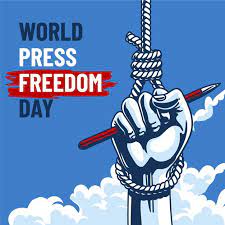
World Press Freedom Day 2024 celebrations register to Attend Bahir Dar under the theme of Let us Combat Information and Environment Pollution discussion and the role of journalism for sustainable development. via emmanews23@gmail.com
or contact Ayele Addis Ambelu
Head of Amhara Region Journalists Association
የ2016 የታሰሩ ጋዜጠኞች ቆጠራ: የታሰሩ የጋዜጠኞች ቁጥር ቀድሞ ወደነበረው ክብረ-ወሰን ተጠግቷል፤ እስራኤል ውስጥ ያለው እስራት አሻቅቧል
በአርሊን ጌትዝ መስከረም 26፣ 2016 የእስራኤል እና የጋዛ ጦርነት መቀስቀሱን ተከትሎ፣ እስራኤል በዓለም ላይ ግንባር ቀደም የጋዜጠኞች አሳሪ አገር ሆና ብቅ እንዳለች የ2016 የጋዜጠኞች መብት ተሟጋቹ (ሲፒጄ) ቆጠራ አሳይቷል። ከቻይና፣ ከማይናማር፣ ከቤላሩስ፣ ከሩሲያ እና ከቬትናም (እንደቅደም ተከተላቸው) ቀጥሎ፣ እስራኤል፣ ከኢራን እኩል የስድስተኛነትን ደረጃን ይዛለች። Available in: በአጠቃላይ፣ ሲፒጄ ህዳር 21፣ 2016 ባደረገው ቆጠራ 320 ጋዜጠኞች […]