
From Pushkin poetry in Addis Ababa to African celebrating Russian traditions in Moscow, a cultural relationship is being rebuilt one conversation, song and friendship at a time
By MESERET ABEBE ABAY, EMMA NEWS (publicmediaet@gmail.com) 05 April , 2026
A Russian poem is read in Addis Ababa.
The voice is Ethiopian. The language is Russian.
Nearby, music begins. Dancers move across the room. Students listen. Teachers watch. Diplomats sit alongside people who have lived in Russia, people preparing to travel there, and others who have never set foot in the country.
For a few minutes, geography seems less important.
The scene carries an unexpected historical echo. At the centre of Russian literary culture stands Alexander Pushkin, the poet whose name is inseparable from the development of modern Russian literature—and whose family history reaches back to Africa.
Pushkin’s maternal great-grandfather, Abram Petrovich Gannibal, was an African nobleman who entered the court of Peter the Great. Historical tradition has long associated Gannibal with Ethiopia, making Pushkin an unusual human and cultural link between Russia and Africa. In Ethiopia, that connection has acquired a life of its own: Pushkin’s name is remembered in Addis Ababa through a square and monument, turning a Russian literary icon into part of the city’s cultural landscape.
It is a remarkable place to begin a story about Russia and Africa.
Because before the diplomatic meetings, before the cultural festivals, before the scholarships and university partnerships, there were stories.
There were poems.
There were books.
There were languages crossing borders.
And there was literature creating connections between people who had never met.
Every June, the world marks Russian Language Day on the birthday of Pushkin. In Addis Ababa, the occasion has become more than a celebration of a language. It has become an opportunity to revisit the cultural relationship between Russia and Africa through poetry, music, education and people-to-people exchange.
In 2026, the celebration at the United Nations Economic Commission for Africa brought together members of the diplomatic community, representatives of international institutions, Russian-language students and members of the Russian community. Poems were recited. Music and songs were performed. Dancers took the stage. The programme also featured Russian cultural objects and artistic expressions.
It was, on the surface, a cultural event.
But beneath the poetry and music was a much larger story.
The Russian language was no longer simply a foreign language being studied in an Ethiopian classroom. It became music. Memory. Education. Literature. A doorway into another cultural world.

And the doorway works in both directions.
Russian literature has travelled into Africa. African writers, languages and cultural traditions have travelled into Russia. Students have crossed borders in pursuit of education. Artists have carried their cultures into new audiences. Translators have moved words from one language into another. Musicians have created conversations without necessarily sharing the same vocabulary.
The relationship, in other words, is not contained in diplomatic communiqués.
It lives in people.
Russian Ambassador to Ethiopia Evgeny Terekhin has described the cultural relationship in direct terms.
“Ethiopian people are very well aware of Russian culture and literature,” he said in an interview with Amhara Media Association. He linked the growing cultural exchanges between the two countries to stronger people-to-people connections and described cultural and educational cooperation as important pillars of the relationship.
That familiarity did not appear overnight.
Generations of Ethiopians have encountered Russian writers, poets, artists, teachers and universities. For some, Russian literature was first encountered through a translated book. For others, it began in a classroom. For still others, it became part of life after receiving an opportunity to study in Russia.
Pushkin therefore offers more than an opening anecdote.
He offers a metaphor.
A Russian literary tradition contains an African historical connection. An Ethiopian audience celebrates Russian language and literature. African students study in Russian universities. African writers and artists have entered Russian cultural spaces. Russian language and cultural programmes continue to operate in African cities.
The lines between the two worlds are therefore more complicated—and more human—than a map suggests.
From Pushkin to the African student learning Russian; from the Russian poem recited in Addis Ababa to African poetry heard in Moscow, the relationship is being written, translated, sung, studied and remembered by people on both sides.
This is the story of that human bridge.

A LANGUAGE WITH A HISTORY
Russian Language Day is celebrated annually on June 6, the birthday of Alexander Pushkin. The United Nations system established international language days to promote multilingualism and cultural diversity. In Addis Ababa, Russian Language Day has acquired a particular meaning. It is connected to education.
Thousands of Africans have studied in Russian universities. Some returned. Some remained. Some became academics. Others entered government, medicine, engineering and business. Language became the thread connecting them.
Russian Ambassador Evgeny Terekhin said at the event that Soviet and Russian universities had trained African specialists in medicine, engineering and public administration.
His statement reflects the Russian diplomatic interpretation of the educational relationship.
But the cultural effect goes beyond the official narrative.
Pushkin gives you a particularly powerful narrative bridge because his ancestry connects Russian literary history with Africa, specifically my Ethiopia.
The Russian Language Day celebration in Addis Ababa was held around the birthday of Alexander Pushkin, whom the Russian cultural center described as a foundational figure in modern Russian literature.
Few figures embody the meeting of the two worlds more symbolically than Alexander Pushkin. Celebrated as one of the foundational figures of modern Russian literature, Pushkin also occupies a distinctive place in African-related memory because of his Ethiopian ancestry. His name therefore creates an unusual literary bridge: an African connection is embedded within one of Russia’s most celebrated literary traditions. Every time his poetry is read in Africa, the relationship becomes more than a diplomatic subject; it becomes part of literary memory.

WHEN STUDENTS BECOME CULTURAL AMBASSADORS
An Ethiopian who spends five years in Moscow does not return with only a university certificate. The graduate returns with memories. Food, Music, Expressions, Friendships, Stories about winter. Stories about the metro. Stories about university life. Stories about people. And sometimes a second language. That is cultural exchange in its most ordinary form. No treaty is required. No summit is required. A conversation can do it. A friendship can do it. A song can do it.
Cambridge’s Slavic Review published research by Olga Nechaeva examining African writers at the Gorky Literary Institute in the 1960s and 1970s. The study discusses Malian writer Gaoussou Diawara and Ethiopian writer Fikre Tolossa, among others.
One documented quotation from Diawara describes the Soviet Union as:
“a world as beautiful and magnetic as the Golden Fleece.”
For some African writers who travelled to the Soviet Union during the Cold War, the encounter was not simply educational. It became a literary and personal experience. Malian playwright and poet Gaoussou Diawara remembered the Soviet Union as “a world as beautiful and magnetic as the Golden Fleece,” while recalling the Russian tradition of hospitality through the image of “bread and salt.” His words reveal how cultural exchange could move from institutions into memory: the country was no longer an abstract political entity but a collection of people, places, books and experiences.
THE RUSSIAN HOUSE IN ADDIS ABABA
The Russian House in Addis Ababa has become one of the physical spaces where this interaction happens. Its activities include Russian-language learning, education information, cultural exhibitions, student support and artistic events. The center has also been used to connect Ethiopian students with Russian universities. This creates a continuum.
A student may first encounter Russian culture in Addis Ababa. Then learn the language. Then receive a scholarship. Then travel to Russia. Then return as an alumnus. Then teach another student. The cycle continues.
The same Cambridge research records Ethiopian writer Fikre Tolossa describing his Soviet education as providing:
“a very strong academic background.”
Ethiopia’s literary connection with Russia also has individual stories behind it. Ethiopian writer Fikre Tolossa, who studied at the Gorky Literary Institute, later described the Soviet system as having given him “a very strong academic background.” His experience illustrates one of the central themes of the Russia–Africa relationship: institutions matter, but their lasting influence is often carried by individuals who return home with new knowledge, literary experiences and memories.

THE RUSSIAN LANGUAGE DAY
The June event provides a particularly strong example. According to ENA, Ethiopian graduates of Russian universities participated in poetry recitals. Russian folk dance and songs were performed. Russian art and traditional souvenirs were displayed. This matters because it changes the meaning of culture.
Culture is no longer something an institution exports. It becomes something people reproduce. An Ethiopian graduate reads Pushkin. An Ethiopian dancer performs Russian choreography. An Ethiopian student learns Russian. The foreign becomes locally interpreted.
The historical research shows that African writers did not merely absorb Soviet culture; they contributed to Soviet literary and cultural life. Atukwei Okai, the Ghanaian poet and Pan-African Writers’ Association figure, praised Soviet publishing, translation and multilingual literary development.
Cultural exchange is not a one-way road. African writers who entered Soviet literary institutions were also bringing African histories, languages, experiences and imaginations into Russian cultural spaces. Ghanaian poet Atukwei Okai praised the Soviet publishing system, translation practices and support for multilingual literary development. The encounter therefore produced a two-way movement: Africa discovered parts of Russian literary culture, while Russian readers and institutions encountered African writers and African perspectives.
PUSHKIN IN ADDIS ABABA
There is something symbolically powerful about Pushkin being celebrated in Addis Ababa. Pushkin is central to Russian literary identity. Yet his poetry can be read in a city thousands of kilometres away. That is how cultural influence works at its best. It is not simply transmission.
It is translation, Interpretation, Adaptation, Curiosity, A poem travels. But it acquires a new listener.
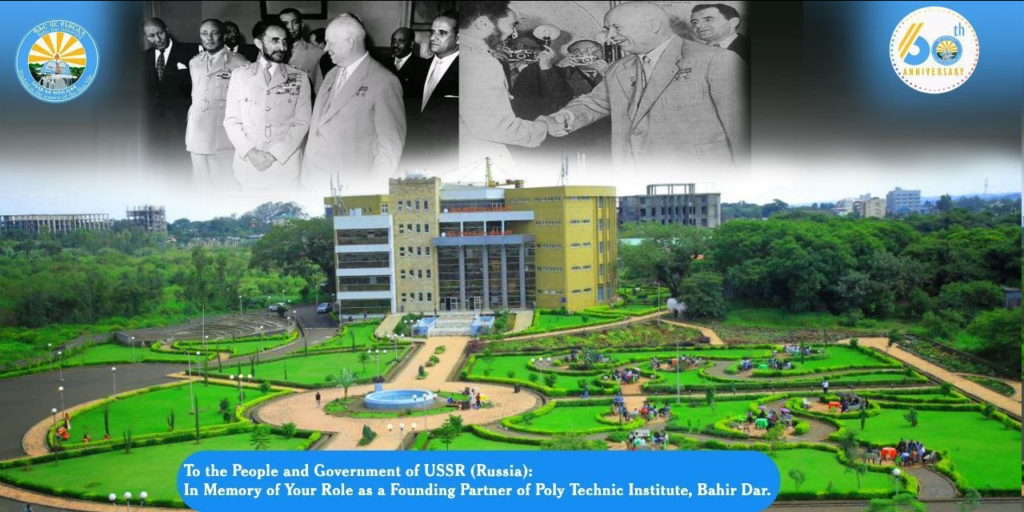
In Memory of USSR Role as a Founding Partner of Poly Technic Institute, Bahir Dar. One if the biggest public university in Ethiopia
CULTURE THROUGH EDUCATION
The strongest cultural connection between Russia and Africa remains education. Education creates repeated contact. A student does not visit a country for two hours. The student lives there. Studies there. Makes friends there. Uses public transport. Visits museums. Attends concerts. Learns social customs. Experiences everyday life. That is much deeper than a cultural festival. It is cultural immersion.
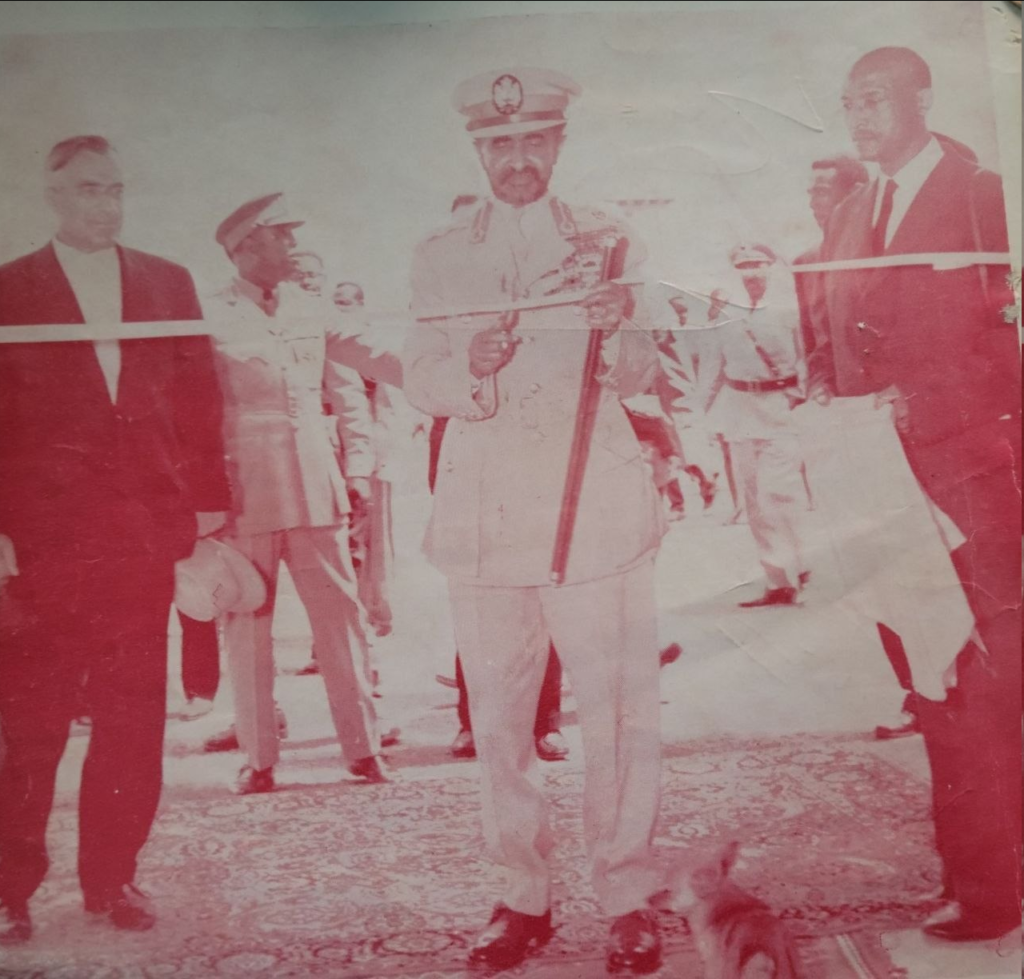
On Sene 4, 1955 E.C., the Bahir Dar Poly Technic Institute—a founding institution of Bahir Dar University (BDU)—was officially inaugurated. Built at an estimated cost of 2.5 million Birr, the institute was inaugurated by EmperorHaile Selassie I. He was accompanied by Vyacheslav Elyutin (the USSR Minister of Higher and Secondary Specialized Education) and Ato Gebre Meskel Kifle Egzie (the Ethiopian State Minister of Education). The institute was constructed by the USSR as a symbol of lasting friendship between the two nations.
THE MOSCOW EXPERIENCE
For Ethiopian students, Russian cultural life can become part of their daily experience. Ethiopian students in Moscow participated in a Maslenitsa celebration at the Andrey Rublev Museum of Ancient Russian Culture and Art. The Russian House described the event as an opportunity for Ethiopian students to experience Russian traditions and connect with Russian cultural history.
Imagine the scene. Young Ethiopians. A Russian festival. A museum. Traditional food. Ancient art. A city thousands of kilometres from Addis Ababa. The student is no longer reading about Russian culture. The student is experiencing it.
“Even during the Soviet era, our universities educated tens of thousands of highly qualified specialists.”
— Evgeny Terekhin.
This is one of your strongest transition quotes from literature into education.
Literature was only one doorway. The university became another—and perhaps one of the most enduring. “Even during the Soviet era, our universities educated tens of thousands of highly qualified specialists,” Terekhin said. Behind that statistic are individual lives: students who learned in Russian, lived in Russian cities, made friendships, studied medicine or engineering and eventually carried their education back to African societies.
THE POWER OF FOOD
Food is one of the simplest forms of cultural diplomacy. Ethiopians know this. Coffee can begin a conversation. A shared meal can turn strangers into friends. Russian students can encounter Ethiopian food. Ethiopian students encounter Russian food.
The experience can be funny. Sometimes difficult. Sometimes surprising. But it creates memories. Culture becomes something tasted rather than explained.
MUSIC CROSSES THE BORDER
The same is true of music. At Russian cultural activities in Ethiopia, Russian songs and folk music are performed. But the cultural interaction does not stop with Russian music.
An Ethiopian jazz group has also performed at the renovated concert hall of the Russian cultural center in Addis Ababa.
The Russian House reported that the reopening included poetry, vocal and choreographic performances, with participation by an Ethiopian jazz band. That is perhaps a better symbol of cultural exchange than a speech. Russian poetry. Russian performance. Ethiopian jazz. One stage. Two traditions. One audience.
The Russian Language Day programme in Addis Ababa included dance performances, music, songs and poetry readings.
But cultural exchange does not always require a lecture or a textbook. Sometimes it begins with a song. Sometimes it is a poem recited in another language, a dance performed on a shared stage or music that requires no translation. At the Russian Language Day celebration in Addis Ababa, language was accompanied by dance, music, songs and poetry, turning a linguistic event into a broader cultural encounter.

THE THEATRE BRIDGE
Theatre is another developing connection. The Ethiopian cultural professionals were invited to participate in Russian programs connected to international theatre cooperation. The program included meetings with Russian cultural institutions, theatre experts and performances in Moscow.
This matters because cultural exchange is not only about audiences. It is about professionals.
Directors, Actors, Designers, Producers, Writers, and Teachers, They exchange methods. They learn new techniques. They develop relationships. And sometimes they create projects together.
In April 2026, RUDN University hosted a Day of Swahili Culture involving more than 300 participants from 13 countries, including poetry, music, books, photographs and African cultural artefacts.
The cultural bridge also runs in the opposite direction. In Moscow, African languages and cultures are not merely subjects being observed from a distance; they are increasingly being presented by African students and cultural communities themselves. In April 2026, RUDN University hosted a Day of Swahili Culture attended by more than 300 participants from 13 countries, featuring books, photographs, cultural artefacts, poetry and musical performances in Swahili. Here, Africa was not simply receiving culture from Russia. Africa was teaching Russia about Africa.
THE CITY ART FESTIVAL
Africa is not only an audience in this relationship; Africa is also an author, performer, teacher and storyteller.
African students, writers, musicians and artists have carried their own languages, histories and traditions into Russian classrooms, theatres, universities and cultural spaces. The result is not a simple transfer from one side to another. It is an encounter in which both sides can change how they understand the other.
The RUDN Swahili event is concrete evidence for this contemporary form of exchange.
The Russian House also participated in Addis Ababa’s 17th City Art Festival. The Russian contribution included an exhibition of student work from the Russian Institute of Theatre Arts, GITIS, focusing on historical stage costume design.
For an Ethiopian audience, the exhibition offered a window into Russian theatre education.
For Russian institutions, the festival offered an opportunity to meet an Ethiopian audience.
Again, the exchange works both ways.
FROM CULTURAL CENTER TO CULTURAL NETWORK
A cultural center is only a building. Its importance depends on what happens inside. If it offers language courses, it becomes a classroom. If it offers scholarships, it becomes an education gateway.
If it hosts exhibitions, it becomes a museum-like space. If it hosts music, it becomes a concert hall. If it brings students together, it becomes a community. If it connects universities, it becomes an institutional bridge. That is what makes cultural diplomacy durable.
Cambridge research documents positive memories among African writers but also unity, inclusiveness and cooperation.
The experiences of African writers and students in the Soviet Union could also include unity, inclusiveness and cooperation between official ideals and everyday life. Recent research on African writers at the Gorky Literary Institute shows that some writers expressed genuine admiration for Soviet cultural and educational. A credible history of Russia–Africa cultural relations therefore has to hold realities together: the opportunities that created meaningful connections experienced by most of the people who crossed the bridge.

THE RELIGIOUS DIMENSION
Ethiopia and Russia also share an unusual historical religious connection. Both have long Orthodox Christian traditions, although they belong to different ecclesiastical traditions.
Russian spiritual-cultural events were held in Addis Ababa under the broader Russian Days project, with participation by representatives of the Russian Orthodox Church and interaction with local Orthodox communities.
The religious dimension is sensitive and should be reported carefully. It should not be presented as evidence that Ethiopians and Russians are culturally identical. They are not. But religious history can provide another area of dialogue.
The Cambridge study notes that African writers formed meaningful relationships and engaged deeply with Soviet cultural life, even while navigating contradictions in their experiences.
Eventually, diplomacy becomes personal. A government may establish a scholarship programme, but a student remembers the professor who taught them. An institution may organize a cultural festival, but an artist remembers the person they met backstage. A language programme may teach grammar, but a friendship gives the language a human voice. This is where international relations leave official documents and enter individual memory.

MEMORY AS CULTURAL DIPLOMACY
Historical memory is another bridge.
Russian community organizations in Ethiopia marked Victory Day at the Russian House in Addis Ababa. The program included music, a memorial wall and cultural activities. The event connected Russian historical memory with a community living in Ethiopia. It also invited Ethiopian participants into a Russian commemorative tradition. That is an important feature of cultural diplomacy. Memory travels.
The deepest bridges between Russia and Africa are not necessarily made of concrete, steel or diplomatic agreements. Some are made of words, books, songs, classrooms, paintings, friendships and memories.
For decades, African students have travelled to Russian universities; African writers have entered Russian literary institutions; Russian literature and language have travelled into African classrooms; and African languages and cultural traditions have increasingly appeared in Russian cultural spaces. Contemporary programmes from Russian Language Day in Addis Ababa to Swahili Culture Day in Moscow—show that the bridge remains active.

THE YOUNG GENERATION
The future of cultural relations will depend less on diplomats and more on young people. That is why youth programs matter. Ethiopian young people were among those targeted by Russian international youth initiatives involving culture, creativity, media, science, education, entrepreneurship and technology. This is a wider cultural model. Culture is not only ballet and literature. It includes digital creativity: Film, Fashion, Technology, Sports, Media, Design and Entrepreneurship.
The cultural relationship is therefore expanding into the language of a younger generation.
Terekhin explicitly linked Russian Language Day to people-to-people relations.
Traditional diplomacy takes place in embassies and conference rooms. Cultural diplomacy can happen somewhere much less formal: in a classroom, a library, a concert hall, a university dormitory or around a shared meal. The Russian Language Day programme in Addis Ababa illustrates this broader understanding of diplomacy, linking language with people-to-people ties, cultural exchange and knowledge transfer.
THE ROLE OF FASHION
Fashion is another unexpected bridge. Russian organizers opened opportunities for international designers, including designers from Ethiopia, to participate in Moscow Fashion Week.
That creates a different form of exchange. An Ethiopian designer can show Ethiopian identity to Russian audiences. A Russian designer can introduce Russian aesthetics to Ethiopian audiences. The result is not cultural replacement. It is cultural conversation.

WHY LANGUAGE MATTERS
There is a practical reason cultural programs continue to emphasize language. Without language, cultural understanding often remains superficial. A translation can transmit meaning. But learning a language creates a relationship with the culture behind it. The student begins to understand jokes, Idioms, Poetry, Songs, History, Academic terminology. And Everyday conversation. That is why Russian language education is a central component of Russia’s cultural outreach in Africa.
From Pushkin to Swahili, the cultural relationship has never been entirely one-directional.
Pushkin represents Russia’s literary tradition and its unusual connection to African ancestry. Swahili represents one of Africa’s major linguistic and cultural traditions now being celebrated within a Russian university environment. Between these two symbolic points lies a much larger history of writers, students, translators, musicians, artists and teachers moving between the two cultural worlds.
THE AFRICAN VOICE IN THE RELATIONSHIP
There is a danger in writing cultural diplomacy stories as if one side is always the giver and the other always the receiver. Africa is not an empty cultural space waiting to be filled. Ethiopia has its own ancient literature, Music, Religious traditions, Languages, Art, Food, Architecture, and History.
Therefore, the strongest Russia–Africa cultural relationship is not one in which Ethiopia simply consumes Russian culture. It is one in which Ethiopians also present Ethiopia. The Ethiopian student becomes both learner and cultural representative. The Ethiopian musician becomes both audience and performer. The Ethiopian scholar becomes both student and future teacher.
Terekhin also said African students studying in Russian received education in fields including medicine, engineering and public administration. ENA reported that around 35,000 African students were pursuing higher education in Russia in 2026.
The student therefore becomes more than a statistic. A scholarship can create an academic relationship, but living in another society creates something broader: cultural familiarity. A student learns not only equations, anatomy or engineering, but also how people communicate, celebrate, eat, work and understand their society. By 2026, around 35,000 African students were reported to be studying in Russian universities, demonstrating the continuing scale of this educational bridge.
THE ALUMNI EFFECT
This is why graduates matter. An Ethiopian who studied in Russia may later become a university lecturer. Students then encounter Russian references through that lecturer. A doctor may use Russian medical training. An engineer may maintain professional relationships with Russian colleagues. A businessperson may know Russian suppliers. A journalist may speak Russian. A researcher may collaborate with a Russian laboratory. The cultural bridge becomes institutional.
“Russian is a language of literature, science, philosophy, diplomacy, and artistic creation.”
— Rita Bissoonauth.
Language, literature and education cannot easily be separated. Learning Russian can open the door to Russian novels and poetry; studying literature can deepen understanding of Russian history; and studying at a Russian university can turn that cultural familiarity into professional knowledge. Rita Bissoonauth described Russian as a language of “literature, science, philosophy, diplomacy, and artistic creation.” In that sense, language becomes infrastructure—not concrete infrastructure, but intellectual infrastructure connecting people and societies.

THE OLD CONNECTION, THE NEW LANGUAGE
The Russia–Africa relationship has a complicated history. It includes Soviet solidarity. Cold War politics. Post-Soviet withdrawal. Russia’s return to Africa. New diplomacy. New eco nomic interests. New cultural programs.
A credible journalistic story should acknowledge that history. But the human dimension should not be lost in geopolitics. A student learning Russian in Addis Ababa is not necessarily thinking about global power. A young Ethiopian studying in Moscow is thinking about exams. A Russian student visiting Ethiopia may be thinking about food, music and friendship. That is where international relations become human.
WHAT THE PROGRAMS LEAVE BEHIND
The most useful question is not how many events happened. It is what remained afterward. Did students continue learning Russian? Did an Ethiopian graduate return and teach? Did an artist establish a partnership? Did a university sign an agreement? Did two students remain friends? Did a Russian-language program produce new learners? Did an Ethiopian artist reach a Russian audience? Those outcomes are more difficult to measure. But they are more meaningful.
A BRIDGE BUILT ONE PERSON AT A TIME
The deepest Russia–Africa connections cannot be measured only in trade figures or diplomatic agreements. They can also be found in the life of a student who learns Russian, the writer who publishes in Moscow, the musician who performs an African song in Russia, the artist who paints across cultures, the translator who carries a poem across a linguistic border, and the friendship that survives after the scholarship ends.
Diplomacy often looks enormous. Presidents, Foreign ministers, Summits, Agreements, and Communiqués.
But cultural diplomacy often works in miniature.
One classroom.
One student.
One poem.
One song.
One meal.
One museum.
One conversation.
One friendship.
Those encounters accumulate.
And after years, they create something that cannot be measured simply by the number of official agreements.
They create familiarity.
THE ETHIOPIAN MEMORY OF RUSSIA
For some Ethiopians, Russia is associated with education.
For others, engineering.
For others, sport.
For others, literature.
For others, historical diplomatic solidarity.
For a new generation, it may be technology.
Artificial intelligence.
Robotics.
Space science.
Creative industries.
That diversity is important.
There is no single Ethiopian view of Russia.
There are many.
But among people who have experienced Russian education and culture directly, personal memory can be powerful.
THE FINAL SCENE
The Russian poem ends.
The Ethiopian audience applauds.
The music changes.
A Russian song is followed by Ethiopian performance.
A student who studied in Moscow stands among people who have never visited Russia.
For a moment, the distinction between foreign and familiar becomes less rigid.
That may be the real power of cultural diplomacy.
Not persuading people to think alike.
But giving people opportunities to know one another.
The Russian language becomes one bridge.
Education becomes another.
Music becomes another.
Food becomes another.
Theatre becomes another.
And students become the people who walk across all of them.
“It is actually impossible to mention any area of cooperation where we do not have links.”
— Evgeny Terekhin.
“It is actually impossible to mention any area of cooperation where we do not have links,” Russian Ambassador Evgeny Terekhin said in describing Ethiopia–Russia relations. The history of language, literature, education and cultural exchange helps explain why. The relationship is not held together by one institution or one generation. It moves through students and teachers, writers and translators, musicians and artists, books and languages, friendships and memories. The faces may change, but the human connections continue to create new chapters in an old story.
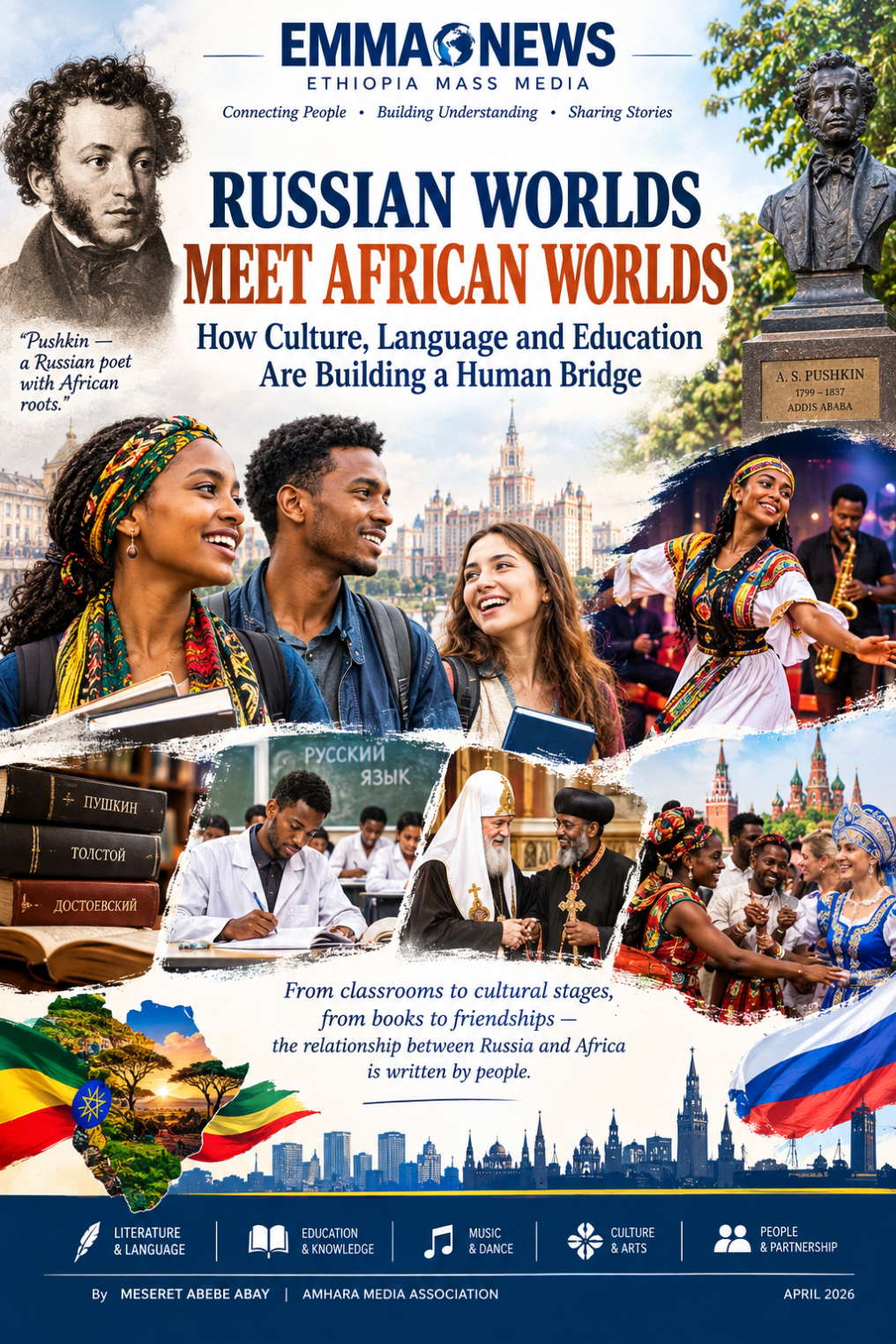
GENDER, MEDIA, AND SOCIAL JUSTICE IN ETHIOPIA
POWER AND PEOPLE: GENDER, MEDIA, AND SOCIAL JUSTICE IN ETHIOPIA Four Powerful Radio Conversations Inspired by Pulitzer Center-Supported Investigative Journalism What happens when investigative journalism leaves the newsroom and enters communities? What happens when women, young people, experts, and ordinary citizens come together to discuss the issues shaping their lives? Beginning this month, EMMA Radio […]