
By Meseret Abebe Abay
ADDIS ABABA — A Nation Open for Business, but at What Cost?
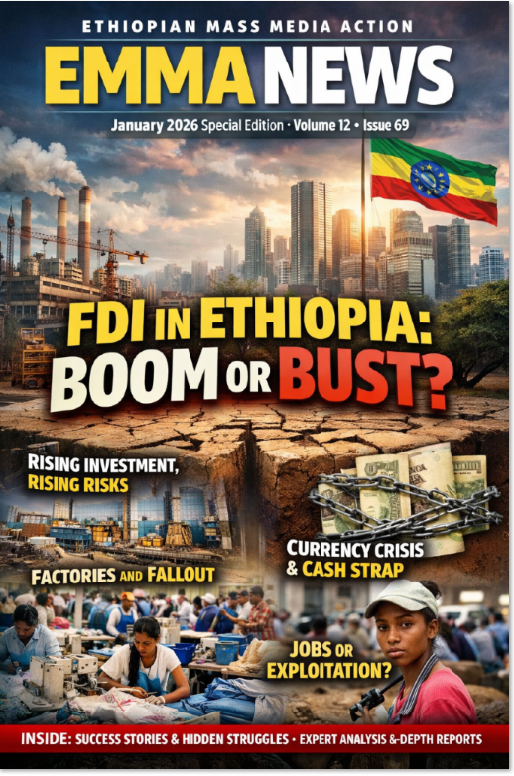
When Ethiopia announced sweeping economic reforms after 2018, global investors took notice. From gleaming industrial parks to a landmark telecom liberalization, Foreign Direct Investment (FDI) was positioned as the engine of transformation. Billboards across Addis Ababa declared opportunity. Government roadshows pitched stability and scale. Delegations from Asia, the Middle East, Europe, and North America queued for meetings.
But beneath the optimism lies a complex and evolving story one of progress, fragility, political risk, structural reform, and the difficult balance between sovereignty and globalization.
This investigative news analysis draws on government reports, international financial data, industrial park performance documents, and interviews with economists, policy experts, and industry insiders.
The Big Bet: Industrialization Through FDI
Ethiopia’s FDI strategy accelerated after the mid-2000s, when the government adopted a state-led development model emphasizing infrastructure and manufacturing. The launch of large-scale industrial parks including Hawassa, Bole Lemi, and Kombolcha was designed to attract export-oriented foreign manufacturers.
According to investment reports from the Ethiopian Investment Commission (EIC), annual FDI inflows increased significantly between 2014 and 2017, making Ethiopia one of Africa’s leading FDI destinations at the time.
“Ethiopia built one of the most ambitious industrialization programs in Sub-Saharan Africa,” says Dr. Fitsum Abate, an Addis Ababa–based development economist interviewed for this report. “The infrastructure push, railways, power, roads was directly tied to attracting foreign manufacturers.”
Chinese companies played a leading role in infrastructure and manufacturing. Turkish and Indian firms invested heavily in textiles and agro-processing. Gulf investors targeted commercial agriculture. Ethiopia became part of global supply chains almost overnight.
Achievements: Jobs, Exports, and Infrastructure
1. Employment Generation
Industrial parks collectively employed tens of thousands of young Ethiopians, particularly women. For many rural migrants, these jobs represented their first formal employment.
An HR manager at Hawassa Industrial Park, speaking on condition of anonymity, told us:
“We created opportunities for young women who previously had limited employment options. Many now support their families.”
2. Export Expansion
Textile and garment exports grew steadily during peak years. Ethiopian-made apparel reached European and American markets under preferential trade schemes.
3. Infrastructure Development
FDI-driven development accelerated electricity generation, logistics networks, and railway expansion connecting Addis Ababa to Djibouti Port.
“These infrastructure investments will outlast any single investor,” notes an official from the Ethiopian Investment Commission.
The Turning Point: Political and Global Shocks
However, FDI inflows are sensitive to political and macroeconomic conditions.
1. Political Instability
The protests that began in 2015 and the armed conflict in northern Ethiopia between 2020–2022 significantly affected investor confidence. Insurance premiums rose. Some multinational firms exited quietly.
A foreign investor representative in Addis Ababa said:
“Political predictability matters more than incentives. Investors can handle cost pressures, but not uncertainty.”
2. COVID-19 Disruption
The pandemic severely disrupted supply chains. Global apparel demand collapsed temporarily, leading to layoffs and factory slowdowns.
3. Loss of Trade Preferences
The suspension of preferential trade access to the U.S. market under AGOA in 2022 dealt a major blow to textile exports.
“AGOA was critical,” explains trade analyst Meron Haile. “Its suspension exposed Ethiopia’s vulnerability to external policy decisions.”
Structural Challenges Exposed
Foreign Exchange Shortage
One of the most cited complaints from investors is the persistent shortage of foreign currency.
A manufacturing executive told us:
“We can produce competitively. But if we cannot access foreign exchange to import inputs or repatriate profits, expansion becomes difficult.”
Bureaucratic Complexity
Despite reform announcements, investors report administrative delays at regional and federal levels.
Federal–Regional Dynamics
Ethiopia’s ethnic federal structure means regional states play a role in land allocation and labor regulation, while federal authorities control macroeconomic policy.
This multilevel governance structure creates both opportunity and confusion.
A policy researcher noted:
“Regional competition can attract investment, but inconsistent regulations between federal and regional institutions create friction.”
Liberalization: A New Chapter
The partial liberalization of the telecom sector marked a major milestone. Granting a private telecom license signaled Ethiopia’s shift from strict state control toward market openness.
The government also announced plans to open banking and logistics sectors to foreign participation.
“This is a paradigm shift,” says financial analyst Dawit Getachew. “It sends a message that Ethiopia wants long-term strategic investors, not just low-cost manufacturers.”
Social and Environmental Questions
Not all impacts are economic.
Labor advocates have raised concerns about wages and working conditions in industrial parks. Environmental groups have questioned water use in agro-industrial zones.
A labor rights activist told us:
“FDI must not mean exploitation. Ethiopia should negotiate from strength, not desperation.”
At the same time, thousands of workers defend the opportunities created.
One garment worker explained:
“This job changed my life. I can support my parents and continue my education.”
The Numbers Tell a Mixed Story
International financial reports indicate that FDI inflows fluctuated sharply between 2018 and 2023 due to political instability and global shocks.
Yet Ethiopia remains one of East Africa’s largest economies, with strong growth potential in agriculture, energy, mining, and digital services.
Investigative Findings: The Core Dilemmas
After months of reviewing investment documents, interviewing economists, and analyzing trade reports, several core dilemmas emerge:
- Quantity vs. Quality of FDI
Ethiopia attracted volume, but did it secure sufficient technology transfer and value addition? - Dependence vs. Diversification
Heavy reliance on textile exports made the sector vulnerable to trade disruptions. - Autonomy vs. Investor Confidence
How can Ethiopia maintain regulatory sovereignty while assuring policy stability? - Regional Competition vs. Coordination
Federal–regional dynamics sometimes complicate implementation.
The Road Ahead: Strategic Choices
Experts argue Ethiopia must now pivot from labor-cost competitiveness to productivity-driven growth:
- Invest in skills upgrading.
- Encourage joint ventures with local firms.
- Strengthen regulatory transparency.
- Restore macroeconomic stability.
- Resolve political conflicts sustainably.
“FDI is not a silver bullet,” concludes Dr. Fitsum Abate. “It works when embedded in strong institutions.”
A Delicate Balance
Ethiopia’s FDI journey is neither failure nor miracle, it is a work in progress.
Industrial parks still operate. Reform momentum continues. Reconstruction efforts open new investment avenues. But investors remain cautious, watching political signals closely.
As Addis Ababa’s skyline grows and factories resume production, the central question persists:
Will Ethiopia transform foreign capital into inclusive, sustainable development—or will structural vulnerabilities limit its promise?
The answer lies not only in investment figures, but in governance, stability, and strategic vision.
By y Meseret Abebe Abay
Editor: Ketema Ambelu
60 ጋዜጠኞች በምርጫ ስነ-ምግባር ስልጠና ተሳትፈው አጠናቀቁ
በአማራ ክልል ሚዲያ እና ኪነ ጥበባት ማህበርከየካቲት 21 እና 22 ቀናት 2018 ዓ.ም (2026) በባህር ዳር ከተማ ያዘጋጀው የመጀመሪያ ዙር የምርጫ ዘገባ ስልጠና ለ60 የማህበረሰብና ዲጂታል ሚዲያ ባለሙያዎች በመስጠት ተጠናቋል። በተለመደው የዜና ስልጠና አቀራረብ አይደለም፤ ይህ የዴሞክራሲ መከላከያ ስልጠና ነው ተብሎ ተገልጿል። “ዝምታ ሀገርን ያጠፋል” ማህበሩ ካካሄደው ቅድመ-ጥናት በኋላ ያቀረበው መልዕክት “ዝምታ ሀገርን ያጠፋል” የሚል […]